My Lower Body Workout Routine
In the blog:
My Lower Body Workout Routine
After transitioning from full-body workouts to an upper/lower split in February 2026, my lower body sessions became more focused, intense, and structured.
This workout complements my upper body day and follows the same cycle:
- Day 1 – Upper Body
- Day 2 – Lower Body
- Day 3 – Rest
- Repeat
Like my upper body session, this workout uses:
- Dumbbells
- Resistance bands
- Bodyweight
No machines. Just progressive overload and consistency.
This session takes me roughly 60–70 minutes, depending on rest and intensity.
Activation (5–7 Minutes)
Lower body strength begins with proper glute and hip activation. If the glutes aren’t firing, other muscles compensate and that’s when imbalance begins.
The goal here: wake up hips before loading them.
1. Lateral Band Walks – 15 steps each side
Activates abductors and glute medius.
2. Glute Bridges – 15 reps
Engages glutes and hamstrings.
3. Bodyweight Squats – 15 reps
Prepares quads and reinforces squat mechanics.
4. Banded Clamshells – 15 reps each side
Targets hip stabilizers.
After this, my hips feel stable and ready for heavier movements.
Main Strength Training Session
- 2 sets per exercise
- Training until failure (with proper form)
- Rest: 60–90 seconds
The structure follows key lower body movement patterns:
Squat. Hinge. Single-leg. Isolation. Stability.
1. Goblet Squats (Dumbbell)
Main squat pattern.
Targets quadriceps and glutes.
This is the foundation of my lower body strength.
2. Romanian Deadlifts (Dumbbells)
Main hinge pattern.
Builds hamstrings and glutes.
Improves posterior chain strength.
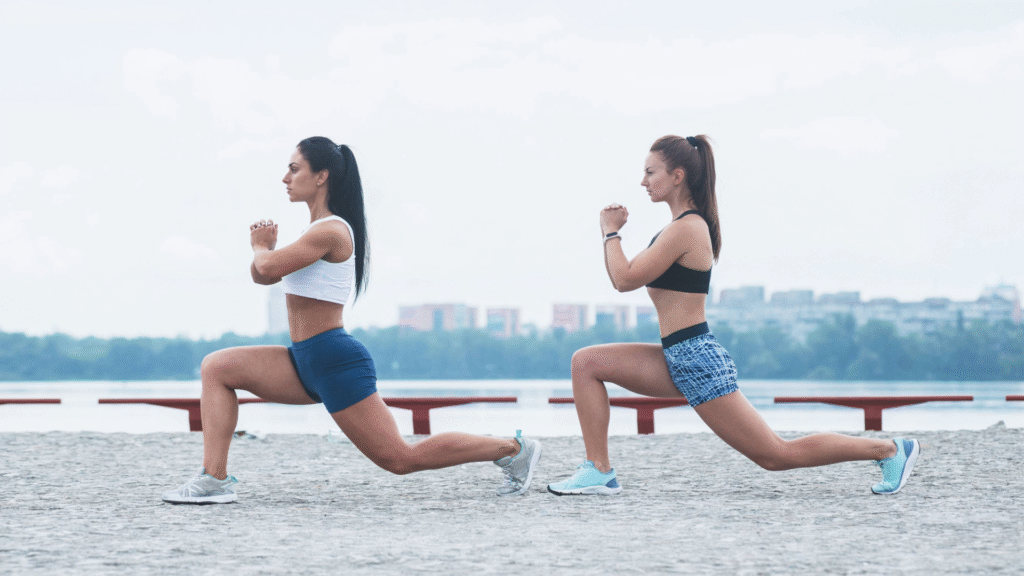
3. Bulgarian Split Squats (Dumbbells or Bodyweight)
Single-leg strength + balance.
Challenges stability while targeting quads and glutes deeply.
One of the toughest movements in the session.
4. Banded Hamstring Curls
Isolation for hamstrings.
Helps build knee flexion strength that compound lifts don’t fully isolate.
5. Dumbbell Hip Thrusts
Primary glute builder.
Focuses on glute strength and power.
6. Standing Dumbbell Calf Raises – 15 reps
Targets calves.
Slow and controlled reps for better activation.
7. Side Lunges (Bodyweight or Dumbbell)
Works adductors and glutes.
Adds lateral movement, which most people neglect.
Optional Finisher
Banded Glute Kickbacks – 15 reps each leg
Extra glute isolation when I want that final burn.
Not mandatory, but effective.
What This Routine Covers
This session trains the lower body completely:
- Quadriceps → Goblet Squats, Bulgarian Split Squats
- Hamstrings → Romanian Deadlifts, Hamstring Curls
- Glutes → Hip Thrusts, Squats, Bridges
- Calves → Calf Raises
- Adductors → Side Lunges
- Abductors → Band Walks, Clamshells
It includes:
- Bilateral movements (both legs together)
- Unilateral movements (single-leg strength)
- Compound lifts
- Isolation exercises
- Lateral movement patterns
Balanced and intentional.
Why This Structure Works for Me
This lower body session focuses on:
- Progressive overload
- Movement quality
- Hip stability
- Strength symmetry
- Long-term joint health
Training at home does not mean training lightly.
With structure, minimal equipment, and consistency, strength builds steadily.
Month 3 of structured training feels stronger, more stable, and more controlled than Month 1.
And that’s the goal: quiet, measurable progress.