My Major Plant‑Protein Sources
In the blog:
My Major Plant‑Protein Sources
One of the most common questions I hear about a plant‑based diet is:
“But where do you get your protein from?”
The assumption behind this question is simple: protein must come from animal foods. But once you understand food composition, digestion, and how plant foods work together, this belief starts to fall apart.
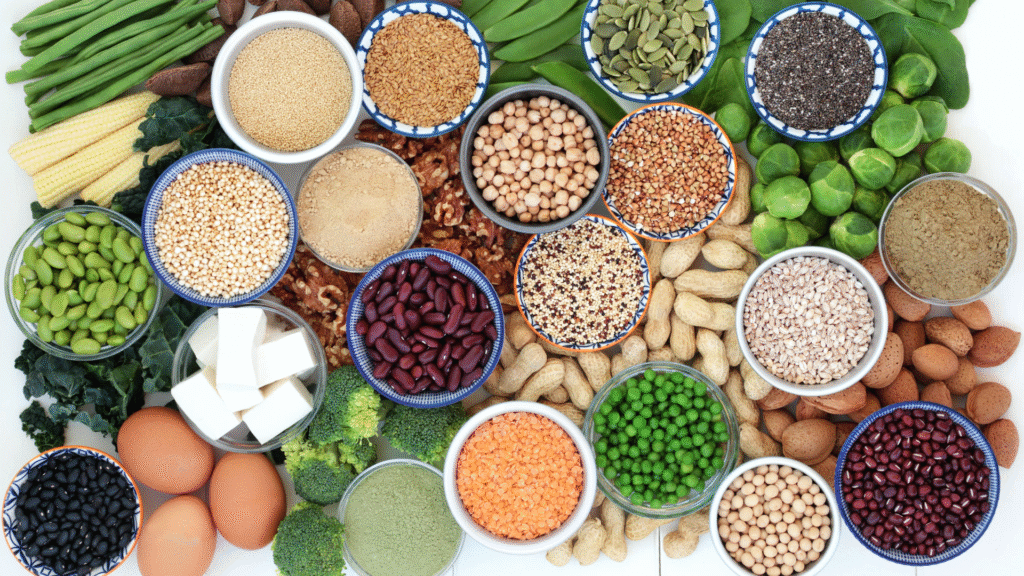
This blog is a structured look at my major plant‑protein sources, how I use them in everyday meals, and why meeting protein needs on a plant‑based diet is not only possible but sustainable.
Understanding plant protein (briefly)
Protein is made of amino acids. Some plant foods are lower in certain amino acids when eaten alone, but a varied plant‑based diet easily covers this.
The focus is not one magical food, it’s diversity, consistency, and whole foods.
My major plant‑protein sources
These are the protein sources I rely on regularly, without forcing extremes or supplements-heavy eating.
1. Soybeans (foundation protein)
Soybeans form the backbone of my protein intake.
I use soybeans to make:
- soy milk
- soy curd
- tofu
These foods are naturally high in protein and extremely versatile.
Why soy works so well:
- complete protein with all essential amino acids
- affordable and accessible
- easy to digest when prepared properly
- fits seamlessly into Indian home food
Soy is not an occasional add-on for me, it’s a staple.
2. Quinoa (protein + complex carb)
Quinoa is more than just a grain substitute.
Whenever I don’t use rice, I use quinoa in my lunch bowl meals. These bowls usually include:
- cooked legumes
- a few steamed vegetables for fiber
- tofu or soy curd
- quinoa as the base
Quinoa is a complete protein and also a complex carbohydrate, making it ideal for balanced meals.
Why quinoa works:
- provides steady energy
- higher protein content than most grains
- supports one‑bowl, nutrient‑dense meals
3. Legumes & dals (strategic use by time of day)
Legumes are a powerful protein source when used thoughtfully.
I usually divide them based on digestion:
Heavier legumes (for lunch):
- black chana
- chickpeas
- rajma
Lighter legumes & dals (for dinner):
- moong dal
- masoor dal
- urad dal
These lighter dals are often used to make:
- chillas
- dosas
- idlis
Why this approach works:
- better digestion
- steady protein intake across the day
- no heaviness at night
4. Plant protein powder (support, not dependence)
I do use a plant protein powder but very intentionally.
Instead of taking a full scoop (which usually provides 24–25 g of protein), I use just one heaped tablespoon.
I add it to my post‑workout oatmeal.
Why I use it this way:
- to complement whole foods, not replace them
- to support recovery after training
- to avoid over‑reliance on supplements
Whole foods remain my priority.
5. Nutritional yeast (small but valuable)
Nutritional yeast is not a major protein source, but it still plays a role.
I usually sprinkle it on my lunch bowl meals.
Why it matters:
- provides some protein
- rich in B‑vitamins
- adds depth of flavor
Even small additions can add up nutritionally.
6. Protein adds up from everywhere
Protein doesn’t come from one source alone, it accumulates.
Foods that quietly contribute protein in my diet include:
- whole wheat
- green peas
- rice
- chia seeds
- flax seeds
- watermelon seeds
When meals are thoughtfully designed, protein becomes a natural outcome, not a struggle.
So, is it really impossible to meet protein needs on a plant‑based diet?
Not at all.
What’s usually missing is knowledge: of food science, nutrition, preparation methods, and portioning.
Interestingly, the regions where people live the longest, the Blue Zones, consume diets that are largely plant‑based.
This doesn’t mean copying blindly. It means observing patterns that work.
A grounded conclusion
I don’t believe in arguing theory without lived experience.
The plant‑based diet I currently follow is working very well for my body, for my strength, recovery, digestion, and overall well‑being.
Because of that lived truth, there is no motivation to return to eating chicken or dairy.
Protein was never the problem.
Understanding food was the solution.